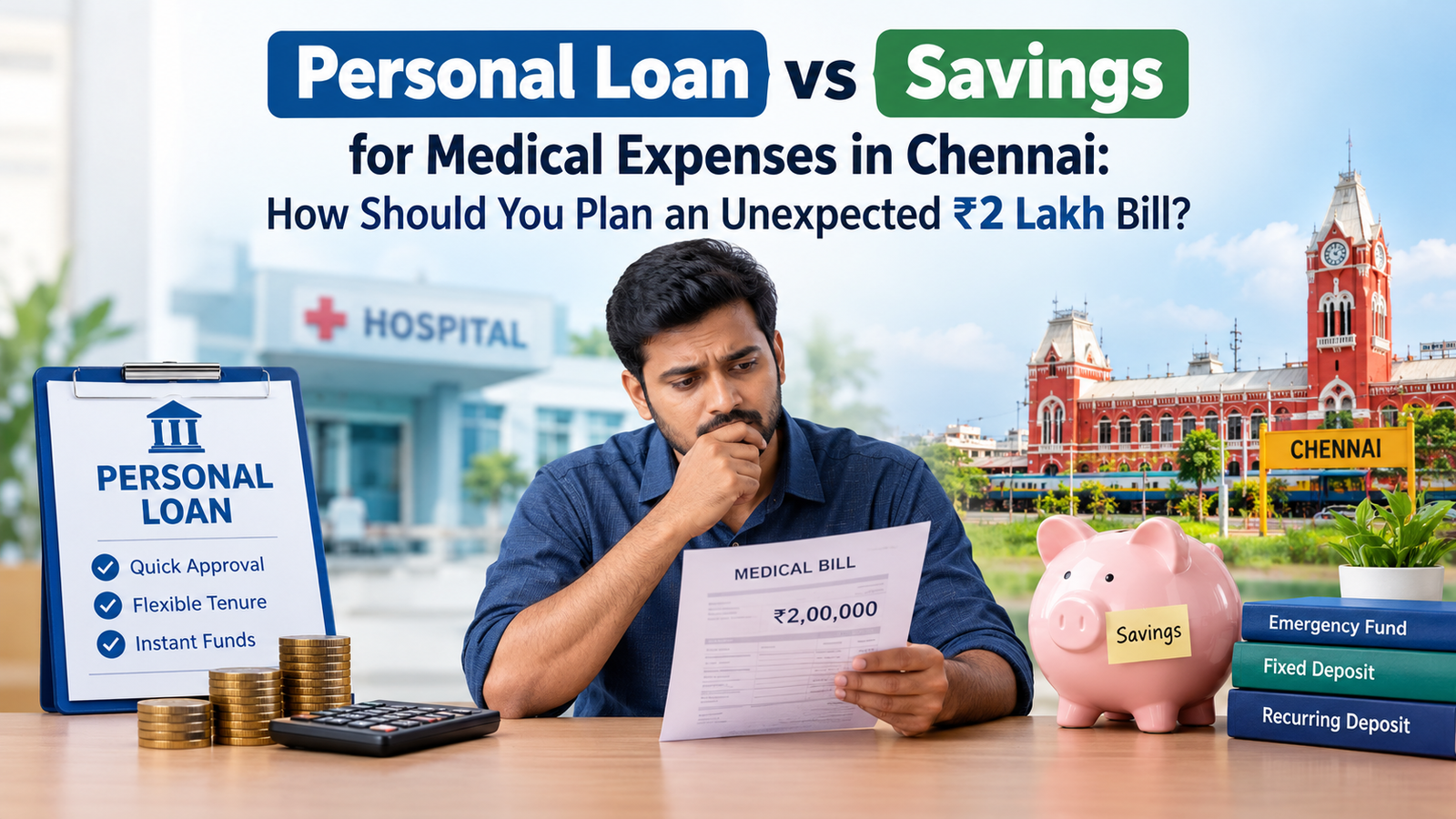
Paying for an emergency ₹2 lakh medical bill can be covered with two options: either pay it using your savings and save yourself from borrowing costs, or apply for a ₹2 lakh personal loan so you do not have to exhaust your savings. Making the correct choice depends on how much savings you have, the urgency, repayment capacity, and the entire cost of borrowing funds.
Introduction
Hospitalization, surgeries, diagnostic tests, and follow-up treatments are some of the medical emergencies that require immediate attention and can create financial pressure. When living in a tier-1 city like Chennai, paying for an unexpected ₹2 lakh medical bill can disrupt your entire budget, especially when you didn’t plan for any of such emergency expenses.
While using your own savings is one of the options to meet these extra costs without taking on debt, but taking a personal loan in Chennai may help you find another way to arrange the money and repay it in monthly installments.
Make sure you compare both options available and how they can affect your financial situation, and make an informed decision.
Should You Use Your Savings to Pay a Medical Bill?
Many people consider using their savings to cover their bills as they consider it a practical choice and do not even have to pay interest or manage EMIs. When you have enough money in your reserves, using some of it for emergencies can help pay for medical bills, and you do not have to increase financial obligations. Choosing your savings offers multiple benefits:
- You are not required to pay any borrowing costs to the lender, as the money is yours.
- You can be free from managing and paying another EMI, and it keeps your budget free.
- There is no wastage of time in applying for funds, as you can get immediate access to the money.
- You can have greater financial freedom and avoid paying for additional costs related to loans.
Using savings can be beneficial, but paying a higher bill can leave you in a vulnerable position. Make sure to analyze the situation and then choose the option that suits you best.
When Can a Personal Loan Help With Medical Expenses?
When your savings are insufficient, or you are reserving the funds for future goals, choosing a ₹2 lakh personal loan can help you pay for the expenses without any hassle. Unlike gold loans, vehicle loans, and home loans, lenders do not require applicants to pledge their assets as collateral, eliminating the risk of losing valuables.
When you need funds to pay for your hospital bills, do the prescribed treatment, or cover any other medical costs, and can manage the timely repayments, consider applying for a personal loan in Chennai. Choosing a personal loan offers multiple benefits, such as:
- Borrowing funds instead of using your savings allows you to gain access to additional funds without having to drain your savings.
- Lenders do not impose any restrictions on the use of funds and allow users to use the funds for their personal purposes.
- Personal loans come with structured EMI payments, allowing you to plan ahead and adjust your budget accordingly.
- Users do not have to worry about losing their assets, as they are not required to pledge their assets as collateral.
What Should You Check Before Borrowing for Medical Expenses?
When you are applying for a ₹2 lakh personal loan, here are some factors that you should consider reviewing:
- Calculate the estimated EMIs on the online EMI calculators offered by the lenders, using the loan amount, interest rate, and tenure, to choose the one that best suits your current situation.
- Processing fees, interest rates, late payment charges, and prepayment penalties are some of the borrowing costs that you must be aware of when applying for a loan.
- The EMI amount and tenure that you choose must be easily paid without straining your budget, and you must have evaluated your expenses and existing financial obligations.
- It is important for you to compare multiple lenders and their offers and make sure to assess the additional costs and terms and conditions before applying for a personal loan in Chennai.
- Review your credit report and score, look for any of the errors, pay off your outstanding debts, and avoid making too many loan inquiries to improve your credit score and get better loan opportunities.
Conclusion
Choosing between savings and a loan for an unexpected medical bill depends on your available funds, insurance coverage and ability to repay. Savings can prevent interest costs, while borrowing may help when your reserves are insufficient. A combination of both may also work if it protects essential savings and keeps repayments manageable.
Finnable offers instant loans at competitive rates, flexible repayment tenures and quick disbursements, subject to eligibility and approval. Its online EMI calculator can help estimate repayments, while its free credit score check feature provides insights without hidden fees or affecting your credit rating.